Almost Fits: The Secret Style Power of Living in the In-Between
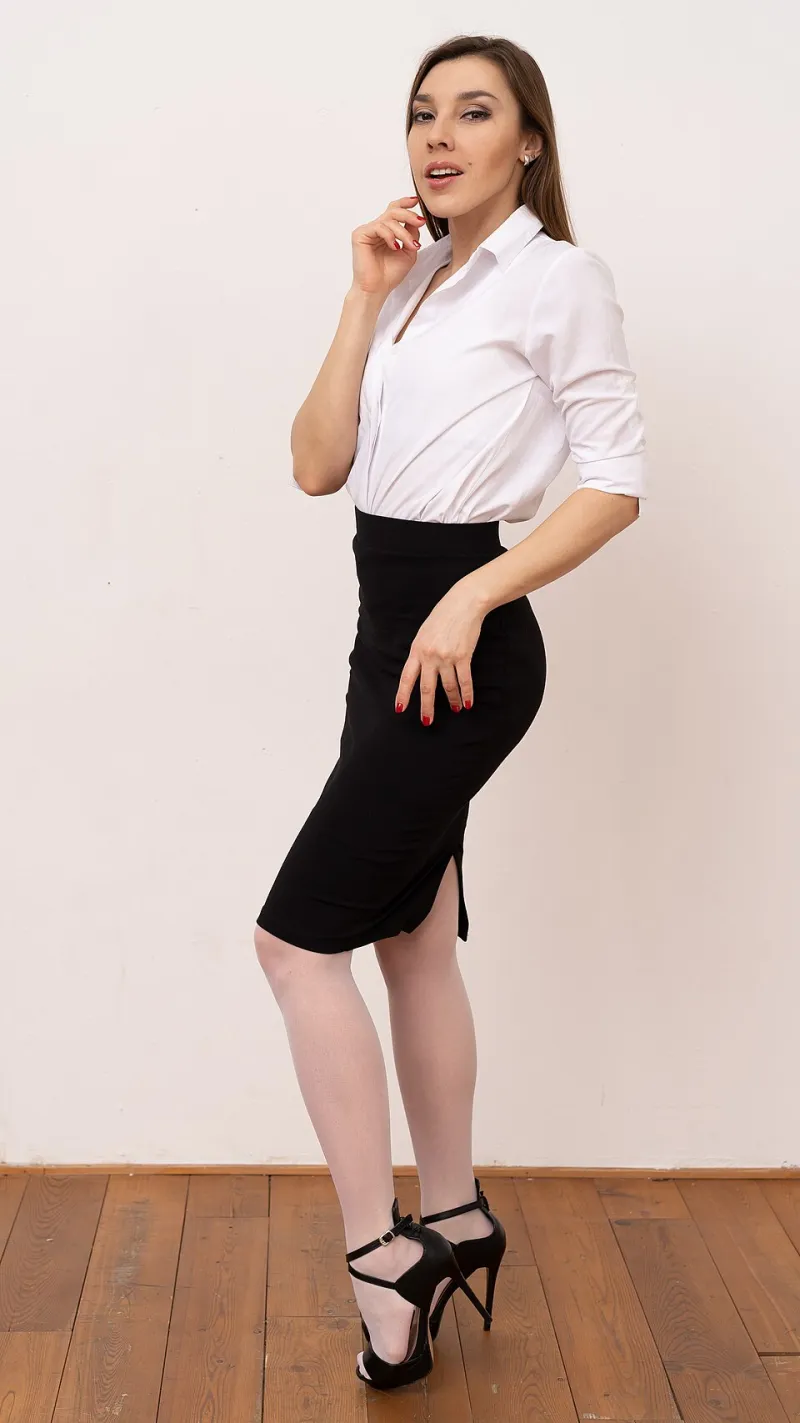
Photo: Tobias ToMar Maier, CC BY-SA 3.0, via Wikimedia Commons
There's a moment every seasoned thrifter knows well. You pull something off the rack, hold it up, and think: this is almost right. The shoulders sit a half-inch too wide. The waist hits somewhere between your actual waist and your hips. The sleeves? They're doing their own thing. And yet — you can't put it back. Something about the almost-ness of it is deeply, inexplicably compelling.
Congratulations. You've stumbled into the Goldilocks Zone of fashion, and it's a lot more stylish than anyone who's ever sold you a perfectly tailored blazer would like you to believe.
The Myth of the Perfect Fit
Let's be honest about something: "perfect fit" is a concept largely invented by people who want to sell you alterations. The idea that clothes should skim every curve at exactly the right millimeter, that nothing should pull or gap or bunch, that your silhouette should be a smooth, uninterrupted statement — it's a fine goal if you're attending a formal gala or testifying before Congress. For the rest of your life, though? It's a little boring.
Perfectly tailored clothes are like a sentence with no punctuation. Technically correct. Completely forgettable.
The in-between fit — that slightly-off, not-quite-right, what is that doing there zone — is punctuation. It's the em dash in your outfit. It makes people pause. It makes you pause.
What "Intentional Slightly Off" Actually Looks Like
Before we go further, let's clarify something important: we are not talking about clothes that are just too small or too big in ways that make you uncomfortable. We are not advocating for suffering in the name of fashion (that's a different article, and honestly, we've all been there with boots).
What we're talking about is the deliberate selection of pieces that sit in a specific, interesting gray area:
- The shirt that fits your shoulders but billows slightly at the torso, creating a soft, architectural shape that no amount of tailoring would produce.
- The trousers with a waistband that hits just below your natural waist, not quite high-waisted, not quite mid-rise, but somewhere that makes your legs look like they start somewhere near your ribcage.
- The jacket that's technically a size up, but because of the fabric weight and structure, it doesn't read "too big" — it reads "intentional drape."
- The dress that skims rather than hugs, creating movement and ambiguity about what's happening underneath, which is, frankly, none of anyone's business.
The key word in all of these is deliberate. You chose this. That choice radiates.
The Psychology of Slight Discomfort (The Good Kind)
Here's where it gets interesting. Stylists who work with clients on building more expressive wardrobes often talk about "body awareness" — not in the anxious, self-conscious sense, but in the sense of actually feeling present in what you're wearing.
Clothes that fit perfectly tend to disappear. You stop thinking about them. Which is great for efficiency, terrible for style. But clothes that fit almost perfectly? You feel them. Not in an uncomfortable way — more like how you feel a good pair of earrings, or a ring on a finger you don't usually wear rings on. There's a low-level awareness that keeps you grounded in your own body.
That awareness changes how you carry yourself. You stand a little differently. You move with more intention. People notice, even if they can't articulate why.
One stylist who works primarily with clients in New York and LA put it this way: "The fits that make people stop me and ask 'where did you get that?' are almost never the perfectly fitted pieces. They're always the ones where something is slightly unexpected. The sleeve is a little long. The hem is doing something weird. There's a question mark in the silhouette, and people want to know the answer."
How to Shop for the In-Between
This is the practical part, and it's genuinely fun once you reframe what you're looking for.
Try things in your size and one size up — simultaneously. Not to decide which is "correct," but to see which one creates a more interesting shape. Sometimes the larger size, belted or tucked, produces a silhouette that the true-to-size version never could.
Pay attention to where hems and waistbands actually land on your body. The "intended" landing spot (as designed for a theoretical average body) and the actual landing spot on your specific body are often different — and the actual spot is frequently more interesting.
Thrift stores are your laboratory. When you're not paying full price, you're free to experiment with fits that you'd never commit to at retail. Pick up the almost-right pieces. Try them. Live in them for ten minutes. See what happens.
Look for fabrics that cooperate with in-between sizing. Stiff fabrics will just look too big or too small. Fabrics with some weight and drape — linen, wool crepe, heavier cotton, drapey viscose — will settle into interesting shapes even when the fit isn't technically precise.
Trust the tuck. A half-tuck, a full tuck, a front tuck — these are the tools that transform an in-between fit from accidental to architectural. They signal intention. They say: I know exactly what I'm doing here, even if what I'm doing is wearing a shirt that's technically a men's large.
The Confidence Equation
Here's the thing nobody tells you about wearing clothes that almost fit: it requires a specific kind of confidence. Not the confidence of looking conventionally polished — that's actually the easier version. This is the confidence of walking into a room and being fine with the fact that your outfit is going to make someone squint slightly and think huh.
That "huh" is not a bad thing. "Huh" is interest. "Huh" is someone's brain engaging with what you're wearing. "Huh" is the opposite of walking past someone and forgetting them immediately.
At Tuba Pants, we've always believed that the point of getting dressed isn't to disappear into the background of acceptable presentation. It's to show up as something worth noticing. And sometimes — often, actually — the most noticeable thing you can do is wear something that makes people think: I can't tell if that fits, but I cannot stop looking at it.
That's not a wardrobe malfunction. That's a silhouette.
The Bottom Line (Which Is Hitting Right at Your Hip, Where It Has No Business Being)
Perfect fit is overrated. Not because fit doesn't matter — it absolutely does — but because the definition of "perfect" has been too narrow for too long. The in-between zone, that awkward, slightly-off, almost-right territory, is where the most interesting style decisions happen.
So the next time you try something on and think it's almost right, don't put it back. Ask yourself: almost right how? And then ask whether that particular almost-rightness might be, in fact, completely perfect.
The answer is probably yes. Buy the thing.