Dead Decades, Living Fits: The Absolutely Unhinged Freedom of Dressing Like You Weren't There
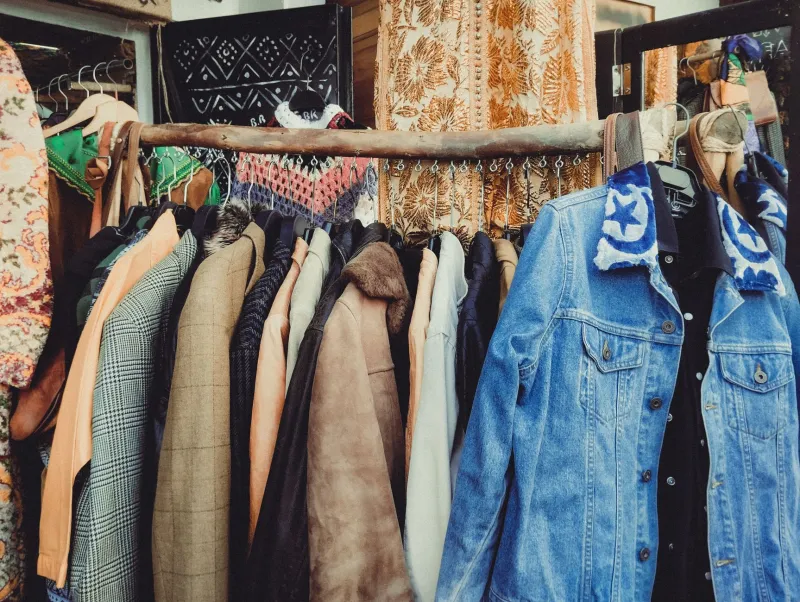
Let's establish something right away: you did not live through the 1970s. You were not there for the polyester negotiations, the wide-lapel summits, or the great platform shoe escalation of 1973. And yet, somehow, the moment you zip up a burnt-orange leisure suit from a Goodwill rack in suburban Ohio, something shifts in your spine. Your shoulders go back. Your chin comes up. You walk out of that dressing room like a man who has opinions about Burt Reynolds and absolutely no problem sharing them.
This is the thrift store time machine. It runs on other people's past lives, and the ticket price is usually somewhere between four and twelve dollars.
Why Your Brain Doesn't Know What Year It Is (And Loves It)
Here's the thing about wearing vintage: your nervous system cannot fully distinguish between performing an era and inhabiting one. When you put on a 1990s slip dress — the kind that Courtney Love would have worn to an event she was technically not invited to — your body receives information. The weight of the fabric, the particular slouch it creates, the way it sits slightly off one shoulder for reasons nobody can explain. Your posture adjusts. Your expression shifts. You become, briefly, a different version of yourself that has never once worried about a credit score.
Psychologists call this "enclothed cognition," which is a fancy way of saying your clothes are quietly running a background program on your personality at all times. Vintage clothes run a very old program. One that predates your anxieties. One that was written before you existed to mess it up.
That's the secret. You can't have baggage from a decade you weren't alive for. A 1968 mod shift dress doesn't know about your situationship. A 1985 oversized blazer with shoulder pads the size of small continents has absolutely no memory of that presentation you bombed in 2019. The clothes are clean in a way new clothes simply cannot be — free of your personal timeline, carrying someone else's story instead.
The Specific Confidence of Borrowed Lives
There is a particular kind of courage that comes from wearing something that already survived its own era. A 1970s wrap dress made it through disco, the oil crisis, and the invention of the fanny pack. It has seen things. When you put it on, you're not just wearing fabric — you're wearing proof of endurance.
New clothes are aspirational. Vintage clothes are historical. And there's a difference in how they sit on your body. Aspiration is nervous. History is settled.
This is why the woman in the 1940s-inspired wide-leg trousers at your local farmers market looks so impossibly unbothered. She's not pretending to be from another era — she's just borrowing its energy for the afternoon. She will return it. Mostly intact. Slightly stretched.
The Decades Are Not Equal (And That's the Point)
Not every era offers the same psychological download, which is worth understanding before you commit to a full look.
The 1960s give you optimism with a slightly unstable edge. Mod prints and geometric cuts say I believe in the future while also saying I have not yet been disappointed by it. Great for job interviews, first dates, or any situation requiring unreasonable confidence.
The 1970s are pure, uncut permission. The decade had no rules and was extremely comfortable with that fact. Flared trousers, earth tones, and aggressively open collar shirts communicate I do what I want in a frequency that hasn't been replicated since. Put on a 1970s outfit and you will inexplicably want to own a van.
The 1980s are power in a slightly terrifying package. The shoulder pads alone could restructure a corporate hierarchy. Wearing 1980s fashion is like borrowing someone's extremely aggressive older sibling — useful in specific situations, slightly overwhelming at brunch.
The 1990s offer the purest form of ironic detachment available to the modern human. Slip dresses, chunky sneakers, and oversized flannels say I care, but I'm not going to tell you about it. This is still, somehow, the most effective social strategy available.
The early 2000s are dangerous territory. Too recent to be vintage, too far away to be current. Proceed with humor and full awareness that you are doing a bit.
How to Actually Pull This Off Without Looking Like a Halloween Costume
The line between "vintage dressing" and "themed party" is thinner than a 1996 spaghetti strap, but it exists. Here's how to stay on the right side of it.
Anchor one era, interrupt it with now. A 1970s blouse with modern straight-leg jeans and clean sneakers doesn't read as costume — it reads as considered. The vintage piece does the talking; the contemporary pieces prove you live in the present. One foot in the past, one foot in your actual zip code.
Wear it like you found it, not like you researched it. The moment you start explaining your outfit's historical context to someone who didn't ask, you've lost the game. Vintage confidence is quiet. It doesn't need footnotes.
Let the fit be a little wrong. This is actually the secret ingredient. Vintage sizing is famously unhinged — a 1960s "medium" is a modern "please-hold-your-breath." The slight imperfection of a vintage fit is what separates it from a costume. Costumes fit perfectly. Real clothes fit approximately.
Mix freely and without apology. A 1950s circle skirt with a band tee from a concert you didn't attend is not a contradiction. It's a statement. The statement is: I contain multitudes, and several of them are from different decades.
The Thrift Store Is a Time Machine You Can Afford
The beautiful, democratizing truth about vintage dressing is that the time machine is available at every Goodwill, Savers, and church rummage sale in America. You don't need to spend four hundred dollars at a curated vintage boutique (though those are lovely and you should absolutely visit them). You need twelve dollars and the willingness to dig through a rack that smells faintly of cedar and someone else's history.
Every piece you find has already been lived in. It survived its original era, survived being donated, survived the fluorescent lighting of a thrift store on a Tuesday afternoon. It made it to you. That's not nothing.
Wear it like it chose you. Wear it like you have no idea what year it is. Wear it like the decade it came from — unbothered, committed, and completely uninterested in your hesitation.
The room will notice. They always do.