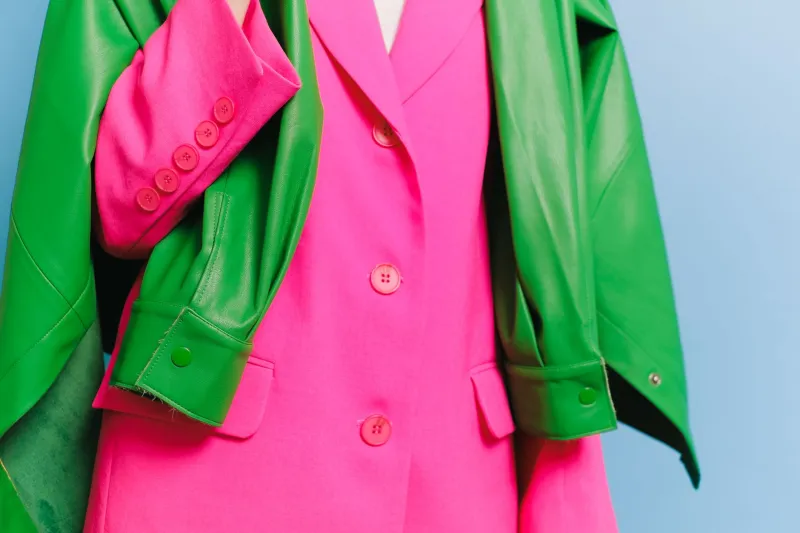
The Chaos Was Planned: Confessions of a Deliberate Mess

Let's get one thing straight: nobody just accidentally looks that good at being a disaster.
You know the person. They float into the party wearing what appears to be a linen shirt they found in a Goodwill bag from 2003, half-tucked into wide-leg trousers that shouldn't work but absolutely do, topped off with some kind of shoe situation that defies categorization. Everyone stares. Someone says, "God, I love how you just don't care." And that person smiles, nods, and quietly dies inside — because they spent forty-five minutes on that shirt tuck alone.
Welcome to the Drip Paradox: the deeply inconvenient truth that looking like you didn't try is among the most labor-intensive things a human being can do with their morning.
The Mythology of Nonchalance
American fashion culture has a long, complicated love affair with the idea of effortlessness. From James Dean's white tee to the entire aesthetic history of Brooklyn, we've collectively decided that trying too hard is the original sin of personal style. The result? An entire generation of people working extremely hard to appear like they're doing absolutely nothing.
This isn't new. Sprezzatura — the Italian Renaissance concept of performing skill so fluidly that the effort becomes invisible — has been the secret operating system of style for centuries. What's changed is that we've democratized it. Now everyone from TikTok influencers to your coworker who always looks inexplicably put-together is running the same con, just at different price points.
The paradox isn't a bug. It's the whole point.
What "Thrown Together" Actually Requires
Here's a partial inventory of what goes into a look that reads as "I grabbed this off the floor":
Knowing your proportions obsessively. That oversized blazer works because the person wearing it has spent real time understanding exactly how much volume their frame can absorb before it starts wearing them. Baggy done right is a precision sport.
Owning the right wrong things. A truly great "I don't care" wardrobe is full of pieces that are weird in very specific, compatible ways. You can't just buy random stuff and call it chaos. You need curated chaos. Think of it less like a junk drawer and more like a junk drawer that someone with a design degree organized in secret.
Understanding color relationships at an almost molecular level. The person who "just threw on" a rust-orange tee under a washed-out burgundy jacket has, consciously or not, internalized the logic of tonal dressing. They know those two colors argue productively. That knowledge didn't come from nowhere.
Fit architecture. Intentional casualness lives and dies by the interplay of fitted and relaxed. One tight thing, one loose thing, maybe one thing that's technically the wrong size but in a way that looks like a choice. Getting this ratio wrong means you don't look effortless — you look like you lost a bet.
The Pre-Game Nobody Talks About
Stylist and wardrobe consultant Dani Reeves, who works with clients across New York and LA, describes her job as "building systems that look like accidents." She spends hours with clients not choosing outfits, but establishing what she calls "outfit logic" — a personal grammar for how their pieces interact.
"The goal is that when you open your closet at 8 a.m., almost everything goes together in at least three ways," she explains. "When that's true, pulling something out at random actually works. But you had to build that closet on purpose."
This is the part nobody posts about. The Sunday afternoon spent trying things on, identifying what doesn't work, donating the aspirational pieces that never quite land, and quietly cataloging what does. The effortless wardrobe is a maintenance project disguised as a vibe.
Strategic Nonchalance: A Framework
If you want to look like you don't care — which, again, requires caring a lot — here's a rough operating framework:
1. Build a chromatic home base. Pick a cluster of colors that live together peacefully and let that be your default universe. Everything you buy should be able to coexist in that palette, even the weird stuff. Especially the weird stuff.
2. Invest in one category of excellence. Maybe it's outerwear. Maybe it's shoes. Maybe it's a very specific type of pants (we obviously have feelings about pants here at Tuba Pants). Pick the thing that anchors your whole look and let everything else be slightly chaotic around it.
3. Learn the half-tuck. Then forget you learned it. The half-tuck is maybe the most visible signal of intentional casualness in American fashion right now. It screams "I started getting dressed and then got distracted by something more interesting." It is, of course, a deliberate styling choice with its own rules. Practice until it looks like you've never thought about it.
4. Embrace strategic wear. Worn-in pieces — faded, slightly stretched, softened by actual use — read as authentic in a way that pristine items never quite do. This is why vintage and thrift finds hit differently. They carry history. If your stuff looks too new, it looks like you're trying. Let things age. Wear your favorites into the ground.
5. Edit ruthlessly, then stop editing. The final and most important step is knowing when to quit. Over-curated "effortless" looks collapse under their own self-awareness. At some point you have to actually walk out the door and commit to the bit.
The Real Flex
There's something genuinely subversive about mastering this particular form of style theater. In a culture that rewards visible effort — that loves a transformation arc, a before-and-after, a clearly legible hustle — looking like you simply exist this way is a quiet power move.
It says: I don't need your validation framework. I'm not performing effort for your approval. I just am.
That's the actual goal. Not the specific pieces, not the color palette, not even the half-tuck. It's the psychological state of someone who has done enough work that they can now genuinely let go — who has built such a solid foundation that improvisation becomes possible.
The chaos was planned. But once the planning is done, the chaos gets to be real.
And honestly? That's the whole game.