No Signature, No Problem: Why Being Unpredictably Weird Is the Strongest Personal Brand You've Never Heard Of
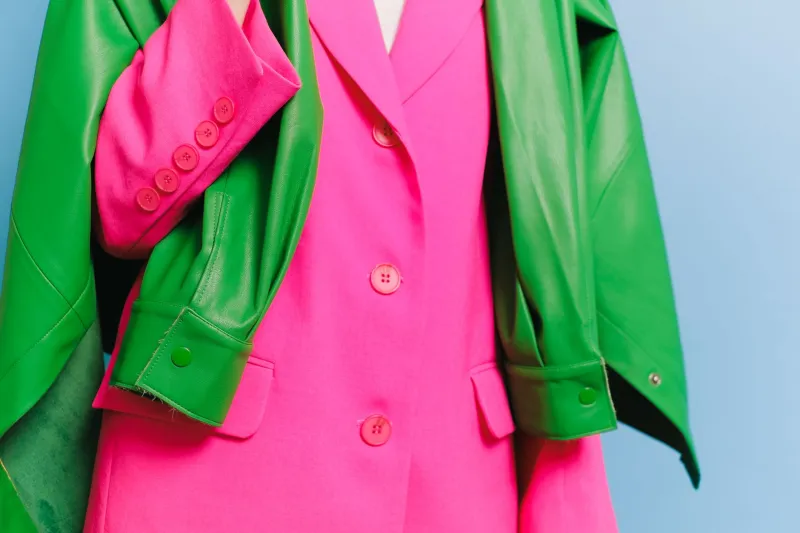
There's a version of personal style that gets talked about constantly in fashion circles, lifestyle podcasts, and the kind of Instagram captions that use the word intentional six times. It's the Signature Look. The uniform. The one thing you're known for. Steve Jobs and his black turtleneck. Anna Wintour and her bob. Your coworker Kevin who has worn the same khakis since the Obama administration.
And sure, fine. The uniform works. We've covered that ground.
But this article isn't about that.
This is about the other move — the one that's harder to explain, more chaotic to execute, and somehow twice as effective. This is about rotating through a whole arsenal of deeply strange, deliberately curated pieces until the only thing people can say about your style is, "I have absolutely no idea what they're going to show up in next, but I am always ready for it."
Welcome to the Uniform That Isn't.
The Problem With Being Pinned Down
Here's the thing about having a signature look: once you've got one, you're trapped by it. People start expecting it. They get confused when you deviate. You become a bit like a mascot — beloved, recognizable, and completely unable to surprise anyone.
Being surprising is underrated.
When you're the person who showed up to the company holiday party in a velvet blazer with embroidered crabs, then wore a floor-length sherbet-orange skirt to the Tuesday all-hands, then appeared at happy hour in a hand-painted denim jacket with what appeared to be a philosophical argument written on the back — people stop trying to categorize you. And when people stop trying to categorize you, they start paying attention to you instead.
That's the mechanism. That's the whole trick.
What "Curated Chaos" Actually Means
Let's be clear about something before we go further: unpredictable weirdness and just grabbing random things off a clearance rack are not the same thing.
The goal isn't to look like you got dressed in the dark at a Goodwill during a fire drill. The goal is to build a collection of pieces that are each, individually, a statement — but that don't belong to the same aesthetic family. They're cousins who've never met. Each outfit is cohesive on its own terms. Together, they form a portfolio of controlled chaos.
Think of it like a music artist who refuses to stay in one genre. Album one is swampy blues. Album two is synth-pop. Album three is an inexplicable country detour. Every project confuses critics and delights fans, because the only consistent thread is quality and weirdness and an absolute refusal to be boring. That's the vibe. You're not a genre. You're a discography.
Why Strategic Inconsistency Is Actually Memorable
Counter-intuitive as it sounds, being consistently unpredictable makes you more memorable than any single iconic piece ever could.
Here's why: memory is largely driven by novelty and anticipation. When you wear the same thing every day, people stop registering you after about a week. You become visual wallpaper. But when every appearance is a new chapter in an ongoing story nobody can predict, people stay engaged. They remember each installment. They talk about you. They wonder what's coming next.
Psychologists call this the "serialized narrative effect" — humans are wired to follow stories with unpredictable outcomes far longer than stories they've already figured out. You're not an outfit. You're a serialized drama with an unresolved plot.
Your wardrobe is prestige television.
Building Your Rotation: The Practical Stuff
Okay, so how do you actually do this without losing your mind or your rent money?
Start by thinking in categories of weird rather than specific pieces. Maybe one category is "formal but wrong" — tuxedo elements worn with sneakers, ballgown skirts over band tees, that kind of thing. Another category might be "aggressively textured" — velvet, brocade, chenille, anything that looks like it belongs on a Victorian sofa. A third might be "color that has no business being on a human body" — chartreuse, burnt sienna, that particular shade of blue-green that makes people ask if you're okay.
You don't need a piece from every category every day. You just need enough variety that no two weeks look the same.
The thrift store is your best friend here, and not just for budget reasons. Thrifting is how you find pieces that are genuinely one-of-a-kind — things nobody else owns, things that stopped being produced fifteen years ago, things that exist in exactly one size (yours, apparently, because the universe is occasionally kind). A curated rotation built mostly on secondhand finds is also a sustainability win, which means you get to be both unhinged and responsible. That's a power combo.
The Social Effect (Or: Why People Will Not Stop Talking About You)
When you commit to this strategy, something interesting starts to happen socially. People begin anticipating your arrivals. Coworkers mention your outfits to people who weren't even there. You become, without trying, a topic of conversation — not in a "what were they thinking" way, but in a "did you SEE what they had on" way, which is entirely different and significantly better.
This is the paradox at the heart of the whole approach: by refusing to give people a single iconic thing to latch onto, you become iconic. Because what they're actually latching onto is the experience of you — the ongoing, never-quite-predictable event that is your presence in a room.
You're not a look. You're a vibe. And vibes, unlike looks, don't go out of style.
The Rule You Actually Have to Follow
There's one rule in all of this, and it's non-negotiable: you have to commit.
Half-hearted weird doesn't work. Apologetic weird doesn't work. Wearing the bold thing and then spending the rest of the day explaining it, hedging it, or quietly hoping nobody notices defeats the entire purpose. The rotation only works when each piece is worn with the same energy: calm, unbothered, completely at home in whatever strange thing you've chosen today.
The outfit is never the point. The point is that you walked in like the outfit was always the obvious choice, and now everyone else is wondering why they're wearing something so forgettable.
That's the uniform that isn't. That's the signature with no fixed shape.
Wear the unexpected. Own every single room.