Soft Pants, Hard Pass: How Comfort Dressing Quietly Stole Your Whole Vibe
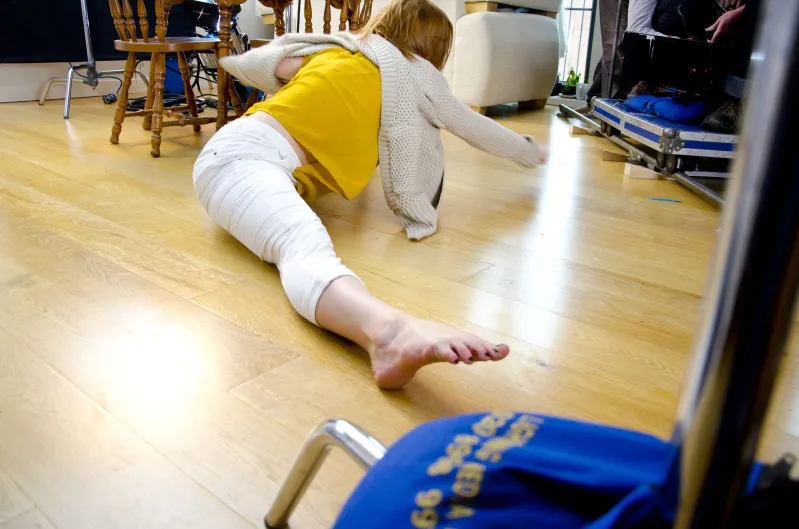
Photo: Bold Content, CC BY 2.0, via Wikimedia Commons
Let's do a quick inventory. Open your closet. How many items in there are some variation of gray, oatmeal, or a color the brand described as 'stone' or 'fog'? How many waistbands are elastic? How many tags say 'moisture-wicking' when the most strenuous thing you do in them is parallel park?
If the answer is 'a lot' or 'honestly, most of it,' congratulations: you have been successfully comfort-trapped.
This is not a personal attack. This is a rescue mission.
How We Got Here (A Brief Tragedy in Leggings)
The athleisure movement didn't sneak up on anyone. It arrived with great fanfare, celebrity endorsements, and the extremely convincing argument that you should be able to go from spin class to brunch without changing. Fine. Reasonable. Nobody's arguing with that.
But then 2020 happened. Offices dissolved. Events evaporated. The entire social contract that once required us to be dressed like humans with opinions got quietly suspended. And we adapted—rapidly, gratefully, and with the kind of commitment usually reserved for actual hobbies.
The problem is that the emergency protocols never fully lifted. The sweatpants stayed. The cloud slides multiplied. The hoodies formed a coalition. And somewhere in there, the clothes that used to say something about who you are got folded into a donation bag or pushed to the back of the rack, quietly replaced by things that say nothing except 'I have given up on being perceived.'
Fashion ghosts. That's what we're calling it. You're present, you're dressed, but nobody—including you—has any idea who you are anymore.
The Sneaky Lie Comfort Sells You
Here's the pitch comfort dressing makes: wear this and you'll feel free. And look, there's some truth in it. A good pair of wide-leg trousers with a forgiving waist is genuinely liberating. A blazer that moves with you instead of against you is a revelation.
But there's a difference between clothes that fit your life and clothes that disappear into your life. One enhances you. The other just... covers you.
The comfort trap convinces you that any friction—any garment that requires thought, intention, or a belt—is an imposition. It tells you that wanting to look interesting is vanity, that dressing with personality is effort you shouldn't have to spend. And slowly, you start to believe it. You start buying things for their return policy and their stretch percentage, and you stop buying things because they make you feel like the most chaotic, fascinating version of yourself.
That's the real cost. Not the money. The you.
The Comfort-Boldness False Binary
Here's where we flip the script, because Tuba Pants did not come here to tell you to wear corsets to the grocery store. The entire premise that comfort and personality are opposites is the actual lie we need to dismantle.
Bold clothes can be comfortable. Weird clothes can be wearable. Statement pieces don't have to hurt.
The framework is simple: start with fit, build with personality.
Fit is the foundation of comfort. A well-fitted linen suit is more comfortable than ill-fitting sweatpants because it works with your body instead of just draping over it. A roomy vintage-inspired dress with pockets is more comfortable than leggings that dig into your waist after lunch. Comfort isn't a fabric—it's a relationship between the garment and your actual dimensions.
Once fit is solved, personality costs you nothing extra. The difference between a plain olive crewneck and an olive crewneck with an unexpected print, a funky collar, or a genuinely weird silhouette is not comfort. It's just courage.
Your Reclamation Framework (No Suffering Required)
Step one: The One-Weird-Thing Rule. You don't have to overhaul your entire wardrobe tomorrow. Start by adding one piece per outfit that has a point of view. It can be the pants. It can be the shoes. It can be a single earring that is technically too much for a Tuesday. One thing. That's it. Just one item that your future self would high-five you for.
Step two: Retire the word 'practical.' Practical is fine for rain boots and coat pockets. It is not a fashion philosophy. Every time you reach for something because it's 'practical,' ask yourself if practical is actually what you want, or if it's just what you've trained yourself to settle for.
Step three: Bring back the outfit. Not clothes. An outfit. There's a difference. Clothes are what you put on. An outfit is what you decide. Even if it's jeans and a top, the act of choosing them together, with intention, with a 'yes, this is the look' moment in the mirror, changes the entire energy. You go from being dressed to being dressed.
Step four: Identify your ghost garments. Go back to that closet. Find the things you bought because they excited you and then never wore because you talked yourself out of it. The printed blazer. The wide-leg trousers in a color that felt like a lot. The top that required a specific bra situation you hadn't solved yet. Those are your breadcrumbs. Follow them back to yourself.
Comfort Is a Floor, Not a Ceiling
We want you to be comfortable. Genuinely. Life is hard enough without your clothes staging a protest by noon. But comfort is the baseline—it's the minimum requirement, not the whole aspiration.
The goal is clothes that feel good and make you feel like something. Like a person with preferences, history, and a general theory about how they want to move through the world. Like someone who, when they walk into a room, registers.
You can have both. You were always allowed to have both. The sweatpants just didn't tell you that.
Wear the unexpected. Own the room. And maybe—just maybe—put the fog-colored moisture-wicking pullover down for a second and see what's behind it.